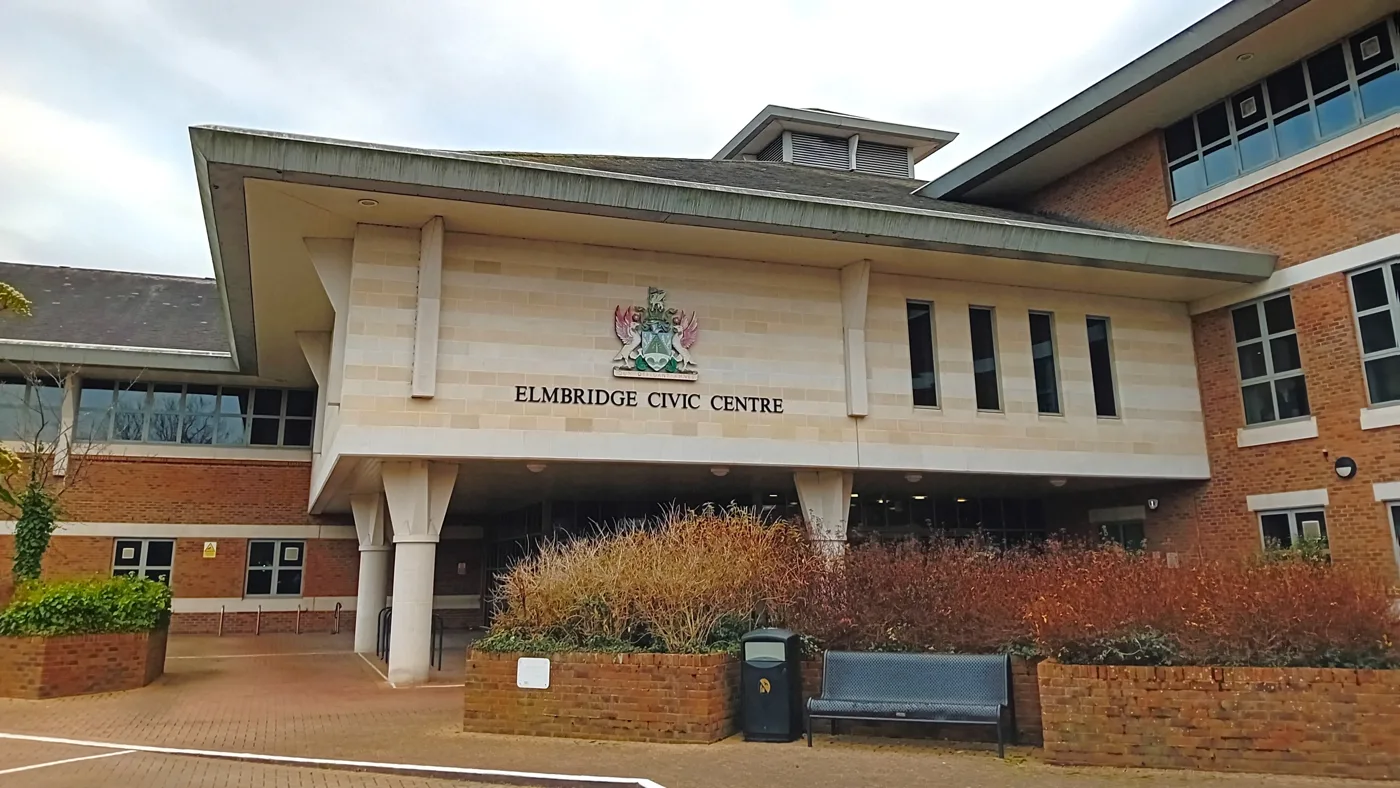

From 31 October, 15 households objecting will no longer force an Elmbridge application in front of councillors, and ward councillors lose their call-in power.
Two of the routes an Elmbridge resident can currently use to get a planning application in front of councillors will stop working on 31 October.
Elmbridge Borough Council published a note on 19 August about the government’s national scheme of delegation, which takes effect that day. It says local priorities will still count, that residents can still comment, and that officers in Elmbridge already decide 96% of applications.
What it does not say is which applications will be taken away from committees, or which local practices have to go. The regulations and the government’s guidance both do, and both are public.
What the council said
The council’s note follows a report to its meeting on 22 July. It confirms:
- the reforms are mandatory and the council cannot opt out
- fewer applications will go to planning committee
- officers at Elmbridge currently determine 96% of applications
- the nominated officer will be the Head of Planning and Environmental Health, and the nominated councillor the Chairman of the Planning Committee, with the Development Manager and Vice Chairman able to deputise
Councillor Caroline James, Portfolio Holder for Planning Services, said residents “should be reassured that their voice will continue to matter” and that councillors “will remain involved in the applications that matter most to our communities”.
The council also sets out what it risks by not complying: legal challenge, appeals, costs awarded against it, and intervention by the Secretary of State.
What the rules actually say
The Town and Country Planning (Discharge of Local Planning Authority Functions) (England) Regulations 2026 were made on 15 July and come into force on 31 October.
Schedule 1 lists the applications a council must hand to an officer. A committee will not be permitted to decide them at all. They include:
- householder applications
- minor commercial applications
- minor residential applications, meaning one to nine dwellings on a site under 0.5 hectares
- prior approval applications and prior approval determinations
- permission in principle
- certificates of lawful use or development
- non-material amendments under section 96A
- reserved matters on an outline permission below 500 dwellings or 50,000 square metres
Everything else falls under Schedule 2, where an officer decides unless the case is referred up. Regulation 5(3) says the nominated member and nominated officer “may agree to refer” a Schedule 2 application to committee if it raises issues of economic, social or environmental significance to the local area, or significant planning matters under the development plan.
On the face of the regulation, that referral needs both of them to agree. The council’s own note puts it differently, saying “the final decision rests with the nominated officers”.
The two Elmbridge routes that close
The government’s statutory guidance, published on 1 June, names two existing practices at paragraph 9. Councils will not be able to keep either: “the power for ward councillors to require cases to be called in for committee consideration” and “having trigger points for referral to committee if a certain number of objections is reached”. Constitutions have to be amended, or decisions become “liable to judicial review”.
Elmbridge’s constitution has both. Part 2, Responsibility for Functions, as published on the council’s website and checked on 21 August, reserves for councillors:
- Major applications where 15 or more households object, or where Claygate Parish Council objects, and officers are recommending approval. A petition or a letter from a residents’ association, political party or conservation area advisory committee counts as one household.
- Minor applications of one to nine dwellings on the same 15-household trigger, decided by an Area Planning Sub-Committee.
- Permission in principle and prior approval applications, again on the 15-household trigger.
- Any application called in by the ward councillor for the ward it sits in, provided there is a material planning concern. Major applications go to the Planning Committee, everything else to the Area Sub-Committee.
Read against the regulations, all four go. The 1 to 9 dwelling cases, permission in principle and prior approval are Schedule 1, so an officer must decide them whatever anyone objects. The ward councillor call-in and the 15-household trigger are the two practices the guidance rules out by name.
One further point the council’s note does not mention. Regulation 7 caps a planning committee at 13 members. Elmbridge’s constitution sets its Planning Committee at 16, with three Area Planning Sub-Committees of 10 each.
What it means for you
If you object to a planning application in Elmbridge after 31 October, three things change.
Objecting in numbers stops being a lever. Getting 15 households to write in currently guarantees a major scheme is decided in public by councillors. From 31 October it guarantees nothing procedurally. Your objection still has to be considered on its planning merits, and it still counts if the case goes to appeal, but it no longer moves the decision to a committee room.
Asking your ward councillor to call it in stops working. They can still object, still write to officers and still argue the case. They can no longer require it to be heard by a committee.
For a small scheme next door, there is no committee route at all. An extension, a conversion, a prior approval, or up to nine homes on a site under half a hectare: an officer will decide it, and the regulations say the council must not make arrangements that limit that officer’s discretion.
What is left is the referral in regulation 5(3), for bigger cases only, needing the Head of Planning and the Planning Committee Chairman to agree the case raises issues of economic, social or environmental significance. The council has promised regular reporting on which applications are referred, by whom, and whether the referral was agreed. That report is the thing to watch, because it is the only public record of how often the new gate opens.
The practical answer is unchanged and now matters more: comment early, comment on planning grounds, and put the argument in writing while the application is live. Our Elmbridge planning news page tracks the borough’s larger schemes, and the borough’s own big test case, the 625 homes proposed at Chippings Farm in Cobham, is well above every threshold here and would still be a committee matter.
Sources
- Elmbridge Borough Council, Changes to planning decisions: what it means for you, 19 August 2026, for the 22 July report, the 96% figure, the nominated officer and member, the risks of non-compliance and Councillor Caroline James’s quote.
- The Town and Country Planning (Discharge of Local Planning Authority Functions) (England) Regulations 2026, SI 2026/854, made 15 July 2026, in force 31 October 2026, for regulations 4, 5(3), 2(2) and 7.
- Schedule 1 to those Regulations for the list of applications that must be determined by an officer.
- Planning Committees and the National Scheme of Delegation of Planning Functions: guidance for local planning authorities in England, published 1 June 2026, paragraphs 4 and 9.
- Elmbridge Borough Council constitution, Part 2: Responsibility for functions, sections 2.1, 2.3 and 2.4, for the committee sizes, the 15-household objection trigger, the Claygate Parish Council trigger and the ward councillor call-in.
More Elmbridge local information: planning news, house prices, roadworks and travel and things to do in Elmbridge.
Have your say